Quiz Blitz: Test Brain Game
- 4.8
- Rating
- 1.00M
- Installs
- Free
- Price
 Analysis by App-foxy
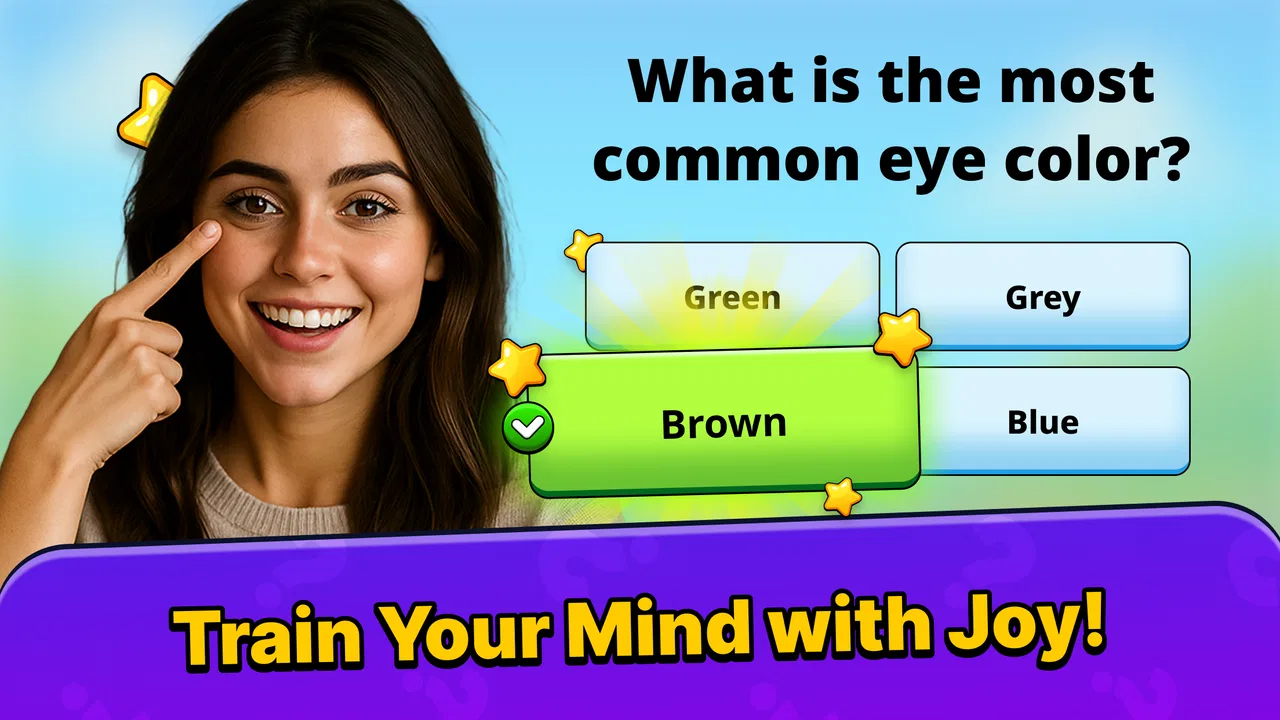
I went into Quiz Blitz: Test Brain Game expecting a quick trivia distraction, and that is exactly where it works best. You read a question, choose an answer, see how you did, and decide whether to try another round. The appeal is not a complicated story or a large collection of systems; it is the small burst of attention required to solve one question and the immediate urge to repair a mistake.
This is a free trivia game from Quiz & Trivia Games by Mno Go Apps, aimed at anyone who enjoys question challenges, short brain exercises, and daily mental breaks. It is available for Everyone, requires Android 6.0 or later, and its current version is 2.8.035. The game has built a strong audience, with a 4.8 average from around 21 thousand ratings and over 100 thousand installs. Those figures suggest that the simple format is connecting with a lot of players, although popularity alone does not make every question or session equally satisfying.
How the question-to-question loop feels
I find the question-to-question loop easiest to enjoy when I treat each answer as a small decision rather than a race. That gives me room to notice whether I knew the fact or simply guessed well, and it makes a missed answer more useful than frustrating. The next thing I would check is whether my device and expectations are set up for the kind of casual play this game offers.
You May Also Like

 AccuWeather: Weather Radar
AccuWeather Review: A Quick, Clear Forecast for Everyday Decisions
For everyday plans, the best forecast is the one you can understand quickly. AccuWeather makes rain timing, radar, and local conditions easy to act on, with a few trade-offs.

 Hill Climb Racing
Why Hill Climb Racing Still Turns Crashes Into One More Run
A tiny car, a bumpy hill and one more upgrade: Hill Climb Racing keeps resurfacing because its simple chaos makes every near-miss feel personal.

 AliExpress - Shopping App
AliExpress Makes Global Shopping Feel Personal, but Shoppers Bear the Risk
AliExpress turns a global marketplace into a pocket-sized discovery engine. Its reach is useful, its shopping loop compelling, and its trade-offs easy to miss.

 Lords Mobile: Kingdom Wars
Lords Mobile Is a Kingdom-Building Routine, Not a Quick Match
A case-by-case verdict on the building, battles, device demands, and social commitments that make Lords Mobile rewarding for some players and exhausting for others.

 PDF Scanner app - TapScanner
TapScanner Makes Paperwork Easier to Capture, Check, and Share
TapScanner makes scanning with a phone feel less like a rescue operation and more like a dependable step in getting work done. Its capture tools are useful, though not flawless.

 Block Blast!
 Shows How Much a Puzzle Game Can Leave Out
A quiet grid game shows why puzzle players increasingly value instant clarity, repeatable skill and low-pressure play—and where the genre still needs to catch up.
More From Our News Desk
View All News


The first action is simple, which is part of the attraction
The best way to approach this game is not as a long gaming commitment. I treat it as a compact quiz session: open it, read the prompt carefully, make a choice, and move on. That low entry cost matters because trivia games lose much of their charm when the player has to manage too many menus before reaching the actual question.
The first useful habit is to slow down for a moment before tapping. A question can look familiar while hiding an important qualifier, and rushing turns a knowledge test into a reflex test. I found that reading the full wording, identifying exactly what is being asked, and then comparing the available answers gives the game a fairer feel. This is also a practical way to use it with children or family members: ask them to explain why they chose an answer instead of treating every question as a race.
Its brain-game positioning works best when I use the app as a warm-up rather than as proof of intelligence. A correct answer feels rewarding, but a wrong one usually points to a gap in memory, an unfamiliar subject, or a moment of careless reading. That distinction keeps the experience light. I can finish a short attempt feeling challenged without turning a missed question into a serious failure.
Feedback keeps the pace moving
The central rhythm is action followed by feedback. I answer, learn whether I was right, and immediately have a reason to continue. That rhythm is more important than decorative presentation in a game like this because the satisfaction comes from closing one small loop and opening the next.
Correct answers provide the obvious lift, but incorrect answers can be just as useful when I treat them as prompts to remember the subject. My advice is to pause briefly after a miss instead of tapping through automatically. Try to identify whether the problem was lack of knowledge, confusing wording, or an impulsive guess. That tiny pause turns a disposable quiz into a more deliberate learning exercise.
The feedback also creates a natural social use case. I can hand the phone to someone else and let them answer the next question, compare choices, or debate an uncertain response. It works particularly well during a short wait, a relaxed break, or a casual evening when nobody wants to commit to a full board game. The format is easy to explain, so a new player can participate almost immediately.
There is a trade-off here. Fast feedback encourages “one more question,” but it can also make me answer too quickly. Players who enjoy carefully studying explanations, building a detailed knowledge notebook, or following a structured course may find the pace too lightweight. This is a quiz loop first, not a replacement for a textbook or a dedicated learning platform.
Why another round feels worthwhile
The reward is mainly psychological: I get a quick test of recall, a small sense of progress, and the satisfaction of correcting a previous mistake. The store presents it as a daily IQ-style challenge, and I think that framing makes more sense when interpreted as a daily mental prompt rather than a formal measurement of intelligence. A handful of questions cannot define how smart someone is, but it can encourage regular curiosity.
I like setting a modest personal goal before starting. For example, I might decide to focus on accuracy instead of speed, or use a session to discover which subjects repeatedly catch me out. This changes the reward from simply collecting correct answers to noticing a pattern in my own decisions. It is one of the more useful ways to get value from a short trivia app without pretending that every round is a serious assessment.
Another practical tip is to avoid playing only when I am already tired or distracted. A wrong answer late at night may say more about attention than knowledge. If I use the game during a commute break, before studying, or between household tasks, I get a clearer sense of whether I actually know the material. The app is especially suitable for those small gaps because it does not demand the emotional investment of a larger game.
The free entry point makes trying it easy, but the presence of in-app purchases changes how I think about continued use. Items range from $0.49 to $124.99 each, so I would not make a purchase casually, especially if a child is using the device. I recommend checking the purchase settings on the relevant app store and deciding in advance whether the free experience is enough. For many players, the sensible approach is to enjoy the core quiz loop without treating optional spending as part of the challenge.
The reset is what creates the habit
After a session, the important question is whether I want to begin again. In this game, the reset comes from the knowledge that the next attempt may cover a different mix of trivia and give me another chance to handle a question I previously missed. That is a modest hook, but it is effective because the effort required to restart is so small.
I would not describe every reset as equally meaningful. If I begin another round immediately after every answer, the game can become background tapping. The better routine is to stop at a natural point, remember one thing I learned, and return later. That makes the daily-challenge idea more useful and reduces the chance that the experience turns into repetitive guessing.
A realistic everyday scenario is a ten-minute lunch break. I can play a few questions, notice that I am confident in one area and weaker in another, then close the app without losing an entire afternoon. Later, I may return because I want to improve that result or simply want another mental change of pace. This is where the game is more convenient than a traditional quiz book: it is ready for a short interval and does not require preparation.
Families can use the reset differently. One person can answer a question, explain the choice, and let another person take the next turn. If the group keeps the focus on discussion rather than winning, the game becomes a conversation starter. It is less suitable for a formal competition where players need a carefully balanced question set, transparent scoring rules, or tournament-level control.
Where it fits among trivia alternatives
Compared with a printed trivia book, Quiz Blitz is more immediate and easier to carry, but a book may be better for people who want to annotate answers, revisit a fixed collection, or play without a screen. Compared with a broad quiz platform built around live multiplayer, this game feels better suited to solo practice and informal sharing. A live alternative is the stronger choice when the main goal is social competition, while this one makes more sense when I want a quiet, repeatable mental break.
It also differs from educational apps that organize lessons by subject and gradually teach a curriculum. Here, the motivation is the question itself and the quick response that follows. That makes it approachable, but it may leave a learner wanting more context. If I need systematic preparation for an exam, detailed explanations, or a clear study plan, I would choose a specialized learning tool instead.
The game’s category is an advantage for people who enjoy variety and dislike long tutorials. Trivia can move easily between familiar and unexpected topics, keeping the next question uncertain. The limitation is that variety can feel less focused than a subject-specific quiz. Someone who only wants geography, language practice, science revision, or history questions should think carefully about whether a general trivia format matches that goal.
Small habits that improve the experience
My first recommendation is to use a two-pass approach. On the first pass, answer only when I have a reasonably clear choice. On the second, reconsider the uncertain questions instead of allowing the fastest impulse to decide. This makes the feedback more informative and helps separate genuine knowledge from lucky guessing.
My second recommendation is to keep a mental “mistake category.” When I miss something, I label the reason: unfamiliar fact, misleading wording, forgotten detail, or rushed tap. Over several sessions, this reveals whether I need broader knowledge or simply better concentration. That is a more useful personal metric than chasing a single perfect run.
My third recommendation is to make the game part of a transition rather than a permanent distraction. A few questions before studying can wake up attention, and a short session after work can provide a clean break. If I keep reopening it whenever I should be sleeping, working, or speaking with someone, the easy restart becomes a weakness. The loop is strongest when I choose it deliberately.
Device suitability is straightforward for many Android users because the game supports Android 6.0 and newer. The Everyone rating also makes it broadly approachable, though that label should not replace supervision or sensible purchase controls for younger players. I would still decide who is using the device and whether spending restrictions are enabled before handing it over.
Who should play it, and who should skip it
I would recommend this game to casual trivia fans, people who enjoy short brain challenges, families looking for an easy question prompt, and anyone who wants a low-commitment activity during spare minutes. It is also a good fit for players who like the emotional cycle of taking a guess, seeing the result, and trying to do slightly better next time.
I would be more cautious about recommending it to players who need deep explanations, carefully sequenced learning, or a robust competitive ladder. It is not the right choice if the main requirement is a formal IQ assessment, a curriculum, or a highly controlled multiplayer contest. Those needs call for different kinds of apps, even if they share the same broad trivia label.
Players who dislike repeated question formats may also lose interest. The loop is intentionally compact, and its strength is convenience rather than complexity. If I want character progression, strategy, exploration, or a large narrative reason to continue, a trivia game will naturally feel limited. That is not a flaw in its intended role, but it is an important expectation to set before installing it.
My verdict on the repeatable loop
Quiz Blitz: Test Brain Game succeeds because its basic cycle is easy to understand: take an action, receive an answer, enjoy the small reward of being right or learning from a miss, then decide whether another session is worth the time. I appreciate that it can fit into a spare moment without requiring a long setup, and I can get more from it by playing thoughtfully rather than tapping as fast as possible.
The game is free to start and comes from Quiz & Trivia Games by Mno Go Apps, with a 4.8 average and a large enough audience to show that the format has broad appeal. Its in-app purchase range means I would keep spending firmly under my control, and its general trivia approach will not satisfy someone looking for structured study or serious competition.
For me, the best reason to return is not the promise of proving anything about my intelligence. It is the simple reset after a short challenge: I can close the game, remember a missed fact, and come back later with a slightly sharper eye. If you want quick trivia with an easy restart and a clear feedback rhythm, this is a worthwhile free game to try.
FAQs for Quiz Blitz: Test Brain Game
01What is Quiz Blitz: Test Brain Game about?
Quiz Blitz: Test Brain Game is an engaging trivia app designed to challenge your knowledge across various categories such as history, science, entertainment, and more. It offers a fun and competitive way to test your brainpower with timed quizzes and leaderboards, encouraging players to improve their scores and climb the rankings.
02Is Quiz Blitz free to play?
Yes, Quiz Blitz: Test Brain Game is free to download and play. However, it offers in-app purchases that can enhance your experience, such as removing ads or purchasing extra lives. This allows players to enjoy the game at their own pace while having the option to expand their gameplay features.
03What features does Quiz Blitz offer to enhance gameplay?
Quiz Blitz includes several features to keep players engaged, such as daily challenges, multiplayer modes, and a variety of quiz categories. The app also provides hints and power-ups to help players during difficult questions, as well as a leaderboard to compete against friends and global users, ensuring a dynamic and interactive experience.
04Does Quiz Blitz require an internet connection?
Quiz Blitz requires an internet connection for certain features, such as multiplayer modes and leaderboard updates. However, you can still enjoy single-player quizzes offline. For the best experience, it is recommended to play while connected to Wi-Fi or mobile data to access the full range of interactive features.
05How does Quiz Blitz keep the content fresh and challenging?
Quiz Blitz regularly updates its question database to include new and relevant content, ensuring that players always face fresh challenges. The app also adds new categories and seasonal events, providing varied and exciting gameplay opportunities that cater to a wide range of interests and knowledge levels.
Pros
- Engaging and varied quiz categories.
- Smooth and intuitive user interface.
- Real-time multiplayer challenges.
- Daily rewards keep users motivated.
- Offline mode available for solo play.
Cons
- Occasional ads can interrupt gameplay.
- Limited hints in free version.
- Some questions repeat frequently.
- Leaderboard sometimes updates slowly.
- Requires stable internet for multiplayer.

Quiz Blitz: Test Brain Game
Gallery